
No Time for Goodbyes
When I was fifteen, my mom died of a heart attack. She and I were so closely bonded that I couldn’t imagine living in the world without her—so much so that in the immediate aftermath of her death, the thought of suicide consoled me. I believed that if I couldn’t be with her in this life, perhaps I could be with her in the afterlife. The state of shock I entered when I saw her dying never fully left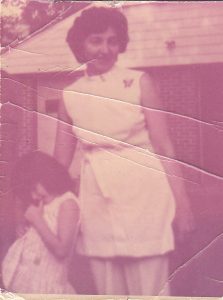 me. Between bouts of uncontrollable crying, I wandered in a daze, unsure of what had happened and sometimes unsure of who or where I was. This is known as dissociation, a symptom of post-traumatic stress disorder. But it wasn’t the only symptom I carried. For years after her death, I had nightmares in which she was alive but unreachable—so terrifying that I often screamed myself awake.
I had the same kind of dreams after my brother Vincent died of a heart attack less than twenty years later, and I still occasionally have them to this day. Less than twenty years after losing Vincent, my sister Annamae died from a hemorrhage in her brain. I had spoken to her on the phone on a
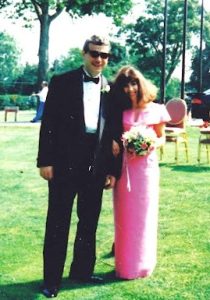
Saturday night, and by Monday afternoon I received a call from her husband telling me she had died. Five years after that, my best friend of nearly forty years passed away when hospital staff failed to properly treat her intestinal blockage. We had lived and traveled together. We shared everything and were supposed to grow old together—but life had other plans.
With each loss, the initial trauma of my mom’s death was retriggered. Sudden loss is profoundly traumatizing and was the primary cause of the complex post-traumatic stress disorder with which I was later diagnosed. In addition to nightmares and episodes of dissociation, I lived with constant anxiety and severe depression. I carried a pain too large to contain and lived in constant fear of being abandoned again. While I had no fear of my own death, I lived with a tremendous fear of losing the people I loved. Who would I lose next? Who would leave me suddenly and prematurely? Even my cats—the little loves of my life—died too soon and without warning.
With my losses, I had no time to say goodbye. Thankfully, my last encounters with my mom, 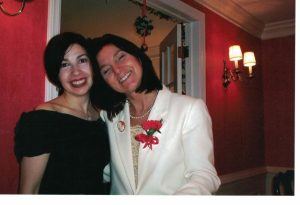 Annamae, and Cathy were all good, but my last encounter with Vincent was the only bad one I ever had with him. I struggled with intense guilt for years after his death. When I was nine years old, Esther—the closest thing I had to a grandmother—died suddenly. The morning before she died was the only morning I ever left without giving her a goodbye kiss. I spent the entire school day feeling terrible, eager to return home and make it right by giving her a big hug. Instead, I came home to the shocking news that she had died.
Without time to process these deaths, I found myself in a strange world—somewhere between the living and the dead. For months after my mom died, I sat at the kitchen table in my childhood home, waiting for her to come through the door she walked through every day after work, to tell me it had all been a bad dream. Although I knew logically this would never happen, I still sat in that same chair, facing the door, a part of me unwilling to accept that such a miracle could not occur. When Annamae passed away, my longing to be with her was so strong that I no longer felt I fully belonged to the earthly world. Yet I knew I wasn’t part of the afterlife either. I felt suspended between worlds.
A Thousand Winds That Blow
After my mom died, my dad, a textbook alcoholic, drank even more. He often yelled at me, chased me out of the house, and was intensely needy, unable to be alone for any length of time. With my siblings away or living their own lives and my mom gone, I became the one he either clung to or lashed out at. In this environment, grieving became a luxury—and one I came not only to appreciate, but to cherish.
Throughout all my losses, my one saving grace was my grief. In recent years, I have come to think of myself as an expert griever. I have never held back or tried to suppress my grief. I screamed and wailed and beat the floor with every death. I never wished my tears away or longed for my grief to end. Sometimes, I even encouraged it—looking at photos of the newly

deceased or playing music that reminded me of them. I knew my grief tears were sacred, especially when my sorrow was pure and uncontaminated by anger or guilt. When my tears were made only of love, they connected me to those I had lost, and through them I could continue loving the person who had left this realm despite their physical absence. My love lived on and continued to grow. Our love continued to grow.
I began to recognize our love as an entity unto itself—something that could never die. Through the immortality of that love, I came to see the immortality of the souls that had once inhabited the bodies of my deceased loved ones. This allowed me to feel their presence in my life and in my world, in a way best expressed by the following poem by Mary Elizabeth Frye, also known as the Hopi Prayer of Death:
Do not stand at my grave and weep I am not there, I do not sleep. I am a thousand winds that blow.
I am the diamond glints on snow. I am the sunlight On the ripened grain. I am the gentle autumn rain. When you awaken in the morning hush, I am the swift uplifting rush Of quiet birds in circled flight. I am the soft stars that shine at night. Do not stand at my grave and cry. I am not there.
I did not die.
In Closing
I hope this post brings you comfort or consolation. I invite you to visit my website, gracemattioli.com, where you can sign up for my newsletter to be notified when my memoir, A Dragonfly Mosaic: My Journey from Fear to Love, is released—a book chronicling my experiences with loss and healing. You can also learn about my 2021 novel, The Bird That Sang in Color, in which death and grief are central themes. On my blog, I share reflections on the book, Grief Is a Thing with Feathers and its therapeutic value for those navigating grief and loss.